
Programme Overview
In Singapore schools, maintaining calm and orderly learning environments is foundational to students’ learning, character development, and well being. As classrooms become more diverse and complex, educators are increasingly required to exercise sound professional judgement to support student behaviour while sustaining high academic expectations and protecting instructional time.
School leaders and teachers commonly report two interconnected challenges:
• the increasing emotional and cognitive demands placed on staff as they respond to students with diverse social emotional and behavioural needs; and
• the risk of gradual erosion of academic rigour when attention is diverted towards managing behaviour in highly pressurised school contexts.
Consistent with MOE’s Character and Citizenship Education (CCE) 2021 curriculum, behaviour support cannot be seen in isolation. It is inseparable from students’ development of values, character, social emotional well being and citizenship dispositions, and from the creation of a caring and enabling school environment that supports holistic development.
The Certificate in Balancing Behaviour Support and Academic Rigour is designed to support Singapore schools in strengthening schoolwide coherence across behaviour support, teaching and learning, CCE, and student well being structures. Drawing on the research and applied work of Associate Professor Tom Brunzell (University of Melbourne), the programme aligns closely with MOE’s emphasis on:
• intentional and coherent whole school approaches,
• building students’ self management and self regulation competencies, and
• supporting staff capability and sustainability.
Rather than framing behaviour as a disciplinary issue, the programme positions student behaviour within the CCE and SEL framework, recognising behaviour as a key expression of how students are developing their identity, relationships, and choices. Participants examine how Tier 1 (universal), Tier 2 (targeted), and Tier 3 (intensive) supports function together to create calm, relational and academically rigorous learning environments, while ensuring appropriate escalation and support through school based student welfare structures.
A defining feature of the programme is its differentiated pathway design, enabling schools to engage the programme as three distinct but aligned courses for different career stages. Across all pathways, strong emphasis is placed on transfer to practice, with participants developing practical artefacts that support immediate and sustained application within their school context.
Alignment with MOE Frameworks and Priorities
This programme is explicitly aligned with the following MOE frameworks and directions:
Learning Outcomes
By the end of the programme, participants will be able to:
Key Competencies Developed
The programme explicitly builds professional and leadership competencies valued in Singapore schools:
Target Audience: School Leaders, Key Personnel and Teacher Leaders
Focus: Systems leadership and schoolwide coherence
Primary Alignment: CCE coherence, staff development, tiered systems, sustainability
This programme focuses on leadership practices that embed calm, relational and rigorous learning as organisational norms.
Participants focus on:
Participants develop a Behaviour and Learning Coherence Plan aligned with school improvement structures.
Programme Structure
1. Calm and Orderly Learning Environments within CCE and SEL
Establish a shared understanding of how calm,relational and academically focused learning environments are created through coherent CCE, SEL and classroom practice rather than reactive behaviour management.
2. Using Data to Support Professional Judgement
Support educators to interpret behaviour,engagement and learning disruption data to distinguish assumptions from patterns and make more confident, evidence‑informed professional judgements.
3. Proactive and Inclusive Classroom Practice
Demonstrate high‑impact Tier 1 classroom routines and relational practices that reduce escalation, support self‑regulation, and maintain instructional time in mixed‑readiness classrooms.
4. Consistency of Staff Response and Coherent Messaging
Strengthen consistency of staff response by clarifying shared language, routines and expectations that align classroom practice with schoolwide behaviour and wellbeing approaches.
5. Tiered Supports and Student Welfare Structures
Clarify how Tier 1, Tier 2 and Tier 3 supports function together within Singapore schools, strengthening alignment between classroom practice, student welfare structures and appropriate escalation.
6. Building Student Self‑Management and Well‑Being
Equip educators with practical strategies to explicitly teach self‑management, co‑regulation and coping skills that support students’ social‑emotional well‑being and readiness to learn.
7. Leading Change Across Career Stages
Support leaders to guide and develop staff across different career stages, addressing resistance constructively while building confidence, clarity and shared ownership of practice.
8. Implementation, Review and Sustainability
Translate learning into action by supporting participants to design practical implementation plans, feedback loops and review processes that sustain improvement over time.
Participant will receive a Certificate of Balancing Behaviour and Academic Rigour.
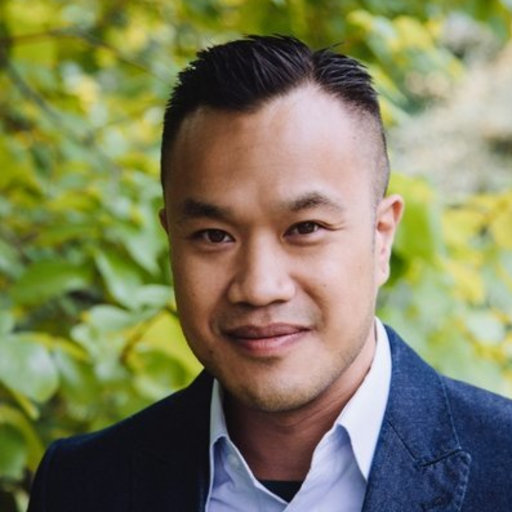
Associate Professor Tom Brunzell (PhD) is an internationally recognised leader in trauma-informed education and wellbeing sciences at the University of Melbourne, Faculty of Education. He examines the impacts of trauma-informed pedagogies through the interdisciplinary integration of the sciences of learning, engagement, and wellbeing, with a particular emphasis on trauma-informed school and education leadership to support both student and staff outcomes. His scholarly works—including books and peer-reviewed publications—are widely accessible through academic databases and global booksellers.
His book: Creating Trauma-informed Strengths Based Classrooms, co-authored with Dr Jacolyn Norrish, is in its 7th reprint available through Hachette/Jessica Kingsley Publishers, UK.
His book: Implementing trauma-informed pedagogies for school change: Shifting schools from reactive to proactive, co-authored with Professor Helen Stokes is available through Emerald Publishing Limited, UK along with his new book is co-authored with Professor Helen Stokes and Jack Grieg, Trauma-Informed Educational Leadership (2025).
Tom was the creator of the Berry Street Education Model (BSEM) and is now an Honorary Fellow at Berry Street Yooralla, in addition to being an Honorary Fellow at Deakin University School of Education.
Course Code:TB16926
Topic: Balancing Behaviour Support and Academic Rigour
Presenter(s): Associate Professor Tom Brunzell
Dates/Time:
Modality: via Zoom
Closing Date: 31 July 2026 Friday
Workshop Fee: S$850.00 per participant (subject to GST).
Please contact Joseph Loy by email at joseph@pai.sg or telephone: 6363 0330 if you require further information.
