
This hands-on workshop explores how AI agents can support learning, pedagogical work and school administration. Participants will move beyond isolated prompts to understand how agents can follow multistep processes, consult defined knowledge sources, use authorised tools, generate outputs and request human approval when necessary.
The central feature of the workshop will be the live development of several working agents for relevant school tasks. Participants will observe and contribute to the complete process: identifying the need, mapping the workflow, configuring the agent, connecting information sources, defining safeguards, testing performance and improving the design.
The emphasis will be on purposeful, bounded automation. Agents will support educators and school teams without replacing professional judgement, meaningful human interaction or accountability for consequential decisions.
Objectives and Contents
Live Agent-development Laboratories
The workshop will combine concise presentations, demonstrations, collaborative analysis and an extended design studio. Participants will bring or select an existing lesson and develop a classroom-ready differentiated learning experience through the following process:
Each agent will be developed live using an accessible no-code or low-code environment and synthetic or non-sensitive data. Participants will contribute use cases, instructions, knowledge sources, test scenarios and improvement proposals. Depending on the available platform, participants may also develop their own small-group prototypes.
Development and testing process
Singapore Context and Responsible Implementation
Examples will show how AI-enabled capabilities within the Student Learning Space, including Learning Assistant, Authoring Copilot, Data Assistant and feedback assistants, can contribute to wider learning and pedagogical workflows. These will be considered alongside other school-approved agent-building, productivity and automation platforms.
Ethical and governance discussions will address student and staff privacy, purpose limitation, data minimisation, external providers, access controls, retention, bias, transparency, unauthorised actions and excessive autonomy. Designs will reflect Singapore's emphasis on bounded autonomy, meaningful human control and clear accountability for agentic AI.
Participants will leave with several demonstrated agent models, at least one prototype or detailed configuration, reusable development templates, a testing protocol and a practical framework for identifying and implementing responsible automation opportunities in their schools.
Who Should Attend
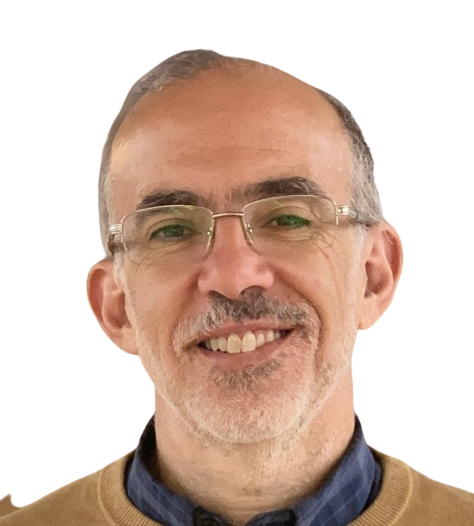
Gabriel Rshaid is a Senior Consultant with the Principals Academy. Gabriel is the co-founder and Director of The Learnerspace, a company whose mission is to help build the future of learning. He is also co-founder of The Global School, the first school of its type in Latin America, attempting to make educational change a reality. Formerly Headmaster of St. Andrew’s Scots School in Buenos Aires, Argentina, the oldest bilingual school in the world, he is a passionate educational futurist who is intent on sharing his belief that it is the best time in history to be an educator.
Course Code: GR31327
Topic: AI Agents and Task Automation in K-12 Education
Presenter(s): Mr Gabriel Rshaid
Date: 31 March 2027, Wednesday
Time: 9.00 am to 5.00 pm
Venue: Orchard Hotel or as otherwise advised
Closing Date: 15 January 2027, Friday
Workshop Fee: S$450.00 per participant, subject to GST.
Please get in touch with Joseph Loy by email at joseph@pai.sg or tel:6363 0330 if you require further information.
